
Our team has grown – meet our six new employees!

Blog
7 min
Blog
7 min
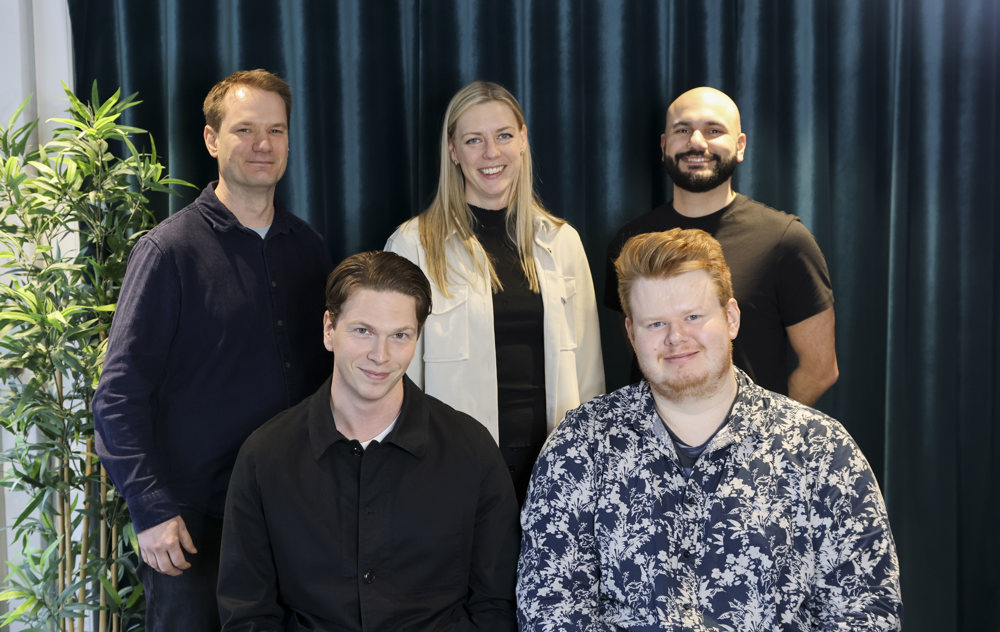
We are so happy to welcome six new employees to Toxic! Meet Peter, Emma B, Josef, Petter, Linus, and Emma R – a wonderful group that together strengthens our team with valuable skills and drive.
Hi Peter! You're new at Toxic. Who are you?
I'm 44 and live just outside Hovslätt. I'm married with two children. In my spare time I play floorball occasionally, and there are always homework sessions to get through with the kids. I'm a fairly straightforward person who likes to take responsibility and is flexible.
What did you do before?
I've worked with various types of systems, including CMS solutions like Umbraco and Sitecore. Previously I also worked with industrial automation — including camera technology for reading positions for robots. Before joining Toxic I was at Consid, where I started in 2009.
How did you hear about Toxic?
Mainly through social media, particularly LinkedIn. I got the impression it was a nice place to work — a bit smaller than Consid, but with an exciting team-based work structure that appealed to me.
What are you most looking forward to here?
Working in the team and being part of our development together.
What do you like to do on a day off?
In winter I'm the neighbourhood's most enthusiastic ice tester, and there's always some project to get stuck into at home when you own a house!
Hi Emma B! You're new at Toxic. Who are you?
I'm a mum of three and a talkative fitness enthusiast who loves spending time with my family and friends.
What did you do before?
Most recently I was at ITAB, where I worked for five years in marketing, digitalisation and IT-related marketing projects. Before that I worked in marketing and digital marketing, mainly at Jeeves.
How did you hear about Toxic?
Toxic is a well-known web agency in Jönköping that I've been aware of for a long time — ever since I studied graphic design and web development at Jönköping University. The web has always interested me, and when an old classmate posted that Toxic was looking for a project manager, I found out there was an opening.
What are you most looking forward to here?
Working with different companies and developing my skills in project management. It feels inspiring to be part of a team of project managers where we can collaborate and keep getting better together. I've also heard a lot about the great atmosphere at Toxic and I'm looking forward to being part of it — working with a fantastic team in a great office. I'm also excited to get to grips with our customers' challenges and help them on their digital journey.
What do you like to do on a day off?
On a day off I like to go to yoga or do something with the family and the kids. Maybe go for a swim or head out into the forest. Or have a long coffee break with friends — with plenty of coffee and cake!
Hi Josef! You're new at Toxic. Who are you?
I was born and raised in Borås and have always had a passion for football, music and basketball. In my spare time I coach futsal and produce music, and I thrive when I have a lot of balls in the air. I care deeply about people and business value and see potential in every individual. I believe everyone has a strength and I genuinely light up when others succeed. As a project manager, now in my sixth year, I focus on common sense — keeping things simple and putting myself in other people's shoes with humility and a genuine desire to understand.
What did you do before?
My professional career started as a project manager and scrum master at Pulsen, where I worked for 4.5 years. As a recent graduate, my focus was on learning as much as possible and developing. I led technically complex teams and worked with processes, which led to a combined role as scrum master and product owner. After that I worked at Consid for two years, delivering training and working on hardware projects — specifically drive shafts and electric motors for Volvo. I was also involved in culture, processes, team building and project management.
How did you hear about Toxic?
The first time I heard about Toxic was when my friend David did his internship here, but it was when Dardan mentioned Toxic that my interest really sparked. Both he and David described Toxic as a great workplace with a great bunch of people and a just-right-sized organisation, and I thought it would suit me. When Dardan told me about the exciting projects, especially the focus on web, my interest grew quickly — and now here I am!
What are you most looking forward to here?
All the opportunities — all the business and all the people. I think we can achieve great things with the right choices and a bit of common sense.
What do you like to do on a day off?
I like to mix it up on my days off. I enjoy meeting friends or spending time in my studio. Sometimes I game as well — right now I'm hooked on Fortnite and Path of Exile 2.
Hi Petter! You're new at Toxic. Who are you?
I'm a 28-year-old frontend developer with a passion for creative solutions and design. If you can't find me out on a run, I'm probably at home on the sofa reading a book or watching a series.
What did you do before?
I worked in industry before deciding to study frontend development. During my final placement I was offered a job at a consultancy. After that I worked as a web developer at a medical company, and now I'm here at Toxic!
How did you hear about Toxic?
I happened to check if there were any open roles, and when I saw they were looking for a web developer I got curious and sent in my application.
What are you most looking forward to here?
Getting to work with people who motivate me and who I can hopefully motivate just as much in return.
Hi Linus! You're new at Toxic. Who are you?
I'm 27 and live in the Söder area of Jönköping with my fiancée. In my spare time I spend a lot of time on board games, role-playing games and card games. I'm extremely curious and love discovering new things.
What did you do before?
I worked at Knowit Experience for five years as a developer — my first job after studying. There I worked as a consultant with a main focus on Wordpress and PHP development.
How did you hear about Toxic?
You came up when I was looking for a place to do my internship. That was back when you were at Science Park. Since then I've kept seeing you pop up in my LinkedIn feed now and then. I also noticed that a bunch of classmates from Jönköping University had joined you.
What are you most looking forward to here?
Working with new platforms, mostly. I spent five years with Wordpress and started to feel like every day was the same as the last. I'm really looking forward to working with C#, Litium and React. It's also exciting for me since this is the first time I've changed jobs. Switching up all my routines and finding new ones will be an interesting challenge.
What do you like to do on a day off?
Ideally spending it with my friends and fiancée playing board games or role-playing games. If not that, the sofa at home with a film or a series sounds very appealing.
Hi Emma R! You're new at Toxic. Who are you?
I'm a nerdy person who got into computers, gaming and the internet as a kid back in the 90s. I built my first website when I was 12. I'm from Gothenburg and have filled my life with travel and adventure. My motto is "I can do anything if I want to." So I rarely say no to new experiences. That might mean learning to sew, paint, code, renovate — anything!
What did you do before?
My whole career has revolved around my interests — I went from technical customer support to IT consultant, which then led me to an opportunity in the gaming industry. These days I'm a web developer. You should work with what you're passionate about.
How did you hear about Toxic?
I found Toxic through a Google search. I don't remember what I was looking for, but I clicked onto the website and thought the company sounded interesting. "This is where I want to work!" I thought.
What are you most looking forward to here?
Getting better at C# and working with like-minded colleagues I can learn a lot from.
What do you like to do on a day off?
A long lie-in followed by a big coffee. Then spending the whole day with my husband, preferably out in nature. After that we go home and play computer games for the rest of the evening and just enjoy each other's company!
A perfect day starts with breakfast on the sofa, then a run, some reading and ending the evening spontaneously by going out somewhere nice to eat.
Read more

List item to the main list: what does it mean for the website?
When a company moves from a growth market like First North or Spotlight to Nasdaq Stockholm's main list, the requirements for transparency, reporting, and corporate governance increase. This is also noticeable on the web. Here we describe what changes and how you can prepare the website for a listing change.
2min

Time to switch platforms? Signs that the destination's website has done its job
Many destinations have a website that was built several years ago. It works, but every change takes time and costs money. Here we go through common signs that it is time to switch platforms and what a change can bring.
2min

Therefore, the booking system and the website should communicate with each other.
A destination often uses several systems simultaneously. Accommodations are booked in one system, ticket purchases or activities in another, and the information about the guests is in a third. When the systems are not connected to each other, the information on the web becomes incorrect or must be moved manually. Here we explain what an integration means and what it does for both the guest and the staff.
3min

From winter to summer: a website that adapts to the right season
For many destinations, the operations change several times a year. The ski slope becomes a bike park and the bathing season transitions into conference season. The website needs to keep up with each transition without a developer having to be involved every time. Here we go through what usually changes between the seasons and how a flexible website makes the switch easier for the editors.
2min

Therefore, you are losing visitors on the way to booking and how you can get more to book directly.
Many who visit a destination's website have already decided to go there. They have read about the activities and compared accommodations but still leave the page without booking. Often, this is because the path to booking has too many steps or feels uncertain. In this post, we will go through common reasons why visitors drop off and how a clearer booking flow can get more people to book directly with you.
3min

Central control, local freedom: who decides what on the group's websites?
When many companies share a platform, new questions arise. Who gets to change what and which content should be managed centrally? Here we describe how corporations can organize editorial work so that it becomes both efficient and secure.
2min

Template or custom? Two paths for the corporation's websites
All companies in a group do not have the same needs. A smaller subsidiary may need a simple website that can be set up quickly, while a larger company may require a completely custom solution. In this blog post, we describe how groups can combine a common template with tailored solutions.
2min

After the listing: how to manage the IR website in everyday life
The listing day is just the beginning. Then come quarterly reports, annual meetings, press releases, and changes in management, year after year. An IR website that was ready on time but is difficult to manage quickly becomes a burden. In this blog post, we go through what the IR year usually looks like and what makes management easy.
2min

New company in the group: how the web will be set up without starting over
Every acquisition raises the same question: what do we do with the website? Without a common foundation, the answer is often a new web project from scratch. Here we describe how a common platform makes it faster and cheaper to connect new companies.
2min

IR-webb in two languages: therefore, the investor information needs to be available in English.
Foreign investors own a large portion of the shares on the Swedish stock exchange. For them, the English IR website is the company's face to the outside world. Yet, the English version is often thinner or less updated than the Swedish. Here we go through why language matters and how you can keep both versions up to date.
2min

Can the group's companies share a web platform and still maintain their brands?
When a group wants to consolidate its websites, a common concern is that the companies will lose their identity. However, a shared platform does not mean that all websites have to look the same. Here we explain how multiple brands can share technology and features while still having their own expression.
2min

This is how you keep the corporate governance section of the IR website up to date: Content and update procedures
The corporate governance section of the IR website is often the one that is updated the least frequently and therefore becomes outdated the easiest. At the same time, this is where investors and analysts look for information about who is in charge of the company and how. Here we go through what content is usually available and how it can be kept updated.
3min

Ten companies, ten websites: when is it time to consolidate the group's websites?
In many corporations, each company has its own website, built at different times by different agencies in different systems. It works for a while, but over time the websites become expensive to manage and difficult to overview. Here we go through the signs that it is time to consolidate the websites and what the corporation gains from it. As an example, we explain how Toxic and Industrireklam consolidated the Weland Group's companies into Weland Light, a common template in Umbraco where changes are rolled out to multiple websites simultaneously.
3min

On the way to the stock market: this needs to be on the web by the listing day
Before a listing, the checklist is long. The website often ends up far down, even though it must be ready and accurate on the same day the stock starts trading. Here we go through what the website needs to be ready for at the listing and how you can plan the work so that it doesn't become a bottleneck.
2min

Multiple facilities, one web platform: how to simplify everyday life for the editors
At many destinations, the hotel, restaurant, ski resort and campsite each have their own website, developed independently over time. The result is duplicated work for content editors and a fragmented experience for guests. In this article, we explore what happens when multiple websites are brought together on a single platform and how Isaberg Mountain Resort approached the challenge.
3min

5 reasons why large organizations and associations choose Umbraco as a CMS
Many large organizations and associations are using CMS solutions that have become too expensive, too complex, or simply no longer fit the business. Editors struggle with things that should be simple, and the technology begins to set limits on what the organization can do. After working with organizations such as LRF, the Tenants' Association, and several sports federations, we see some recurring reasons why the choice often lands on Umbraco CMS.
3min

Why more and more companies are digitizing their B2B sales and how it works
Many B2B companies still receive orders via email, phone, or through their salespeople. It often works well at first, but as the number of customers and order volumes grow, it becomes difficult to keep the information updated and the process becomes too time-consuming. This is one of the most common reasons why more B2B companies are now taking the step towards their own e-commerce platform. In this post, we will go through how orders are often handled today, what problems it creates, and how a digital platform changes the picture.
3min

Umbraco + AI: What exists today and what is on the way?
To say that AI development is progressing at a frightening pace may not be sticking your neck out directly. New models are coming almost every day, and the development does not seem to be slowing down anytime soon. But how can one implement and benefit from it in Umbraco? We will clarify that in this post!
7min

Therefore, you should stop stressing about your AI ranking.
The question arises everywhere: “How do we rank in ChatGPT?” It's a good question because AI search is starting to become an important channel for digital marketing and no one wants to risk falling behind. But before you hire someone who promises to “optimize your AI ranking,” you need to know something. There is no real ranking.
2min

That's why you are losing customers in your B2B trade - and what you can do about it.
In B2C e-commerce, the purchasing experience often revolves around inspiring and enticing. In B2B, it's the opposite. Customers already know what they want, they have probably ordered it before and want to do it again – as quickly and smoothly as possible. Yet, it is surprisingly common for B2B stores to be built with the same logic as consumer retail. This creates unnecessary friction, frustrates customers, and leads to manual work that no one really has time for. So, what does a truly smooth purchasing experience look like in B2B?
3min

When do organizations need to rebuild or redesign their website?
Many organizations use their website for many years without major changes. This is rarely a problem in itself – a website does not need to be rebuilt just because it is old. The problem arises when the technology, content, or visitors' needs have changed more than the website has managed to keep up. It is not always easy to see where the line is between "this we can fix" and "this requires us to rebuild from scratch." Here are four signs worth taking seriously.
3min